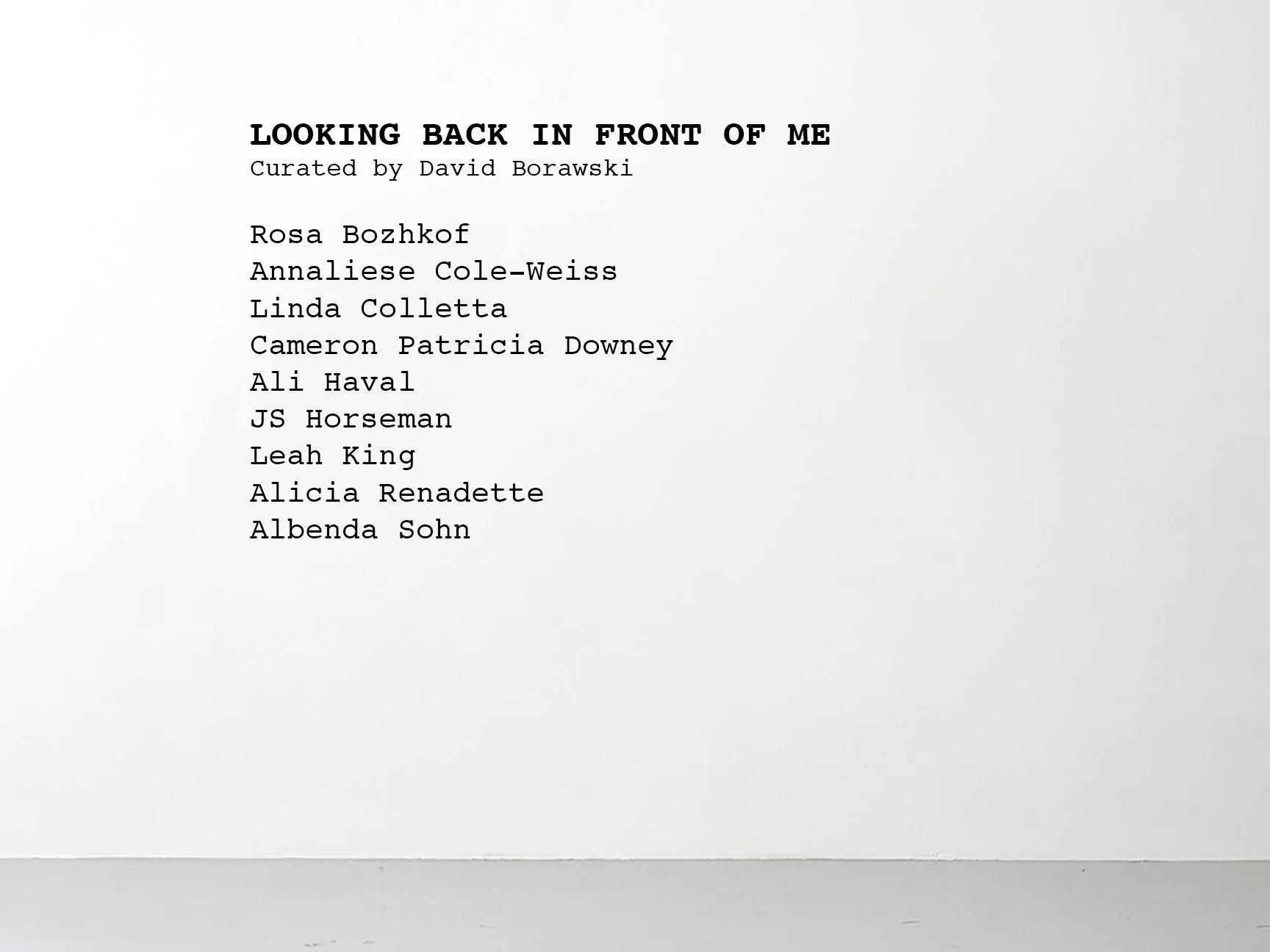
LOOKING BACK IN FRONT OF ME
curated by David Borawski
Exhibition Dates: June 6 - July 30, 2026 (extended)
There are three ways to curate an exhibition, choose the artist, choose the work or do both. For this Digital Grace exhibition, I chose artists from the ECoCA open call database. As I have done for most of the shows I have curated over the years, I look for work that excites me, either by materials, content or imagery. When put together in a mix, connections and surprises reveal themselves. The design and layout of the gallery, (in this case a virtual gallery) is what starts conversations and sets up the exchange of ideas. The work I have selected for LOOKING BACK IN FRONT OF ME hits on all those levels.
-David Borawski
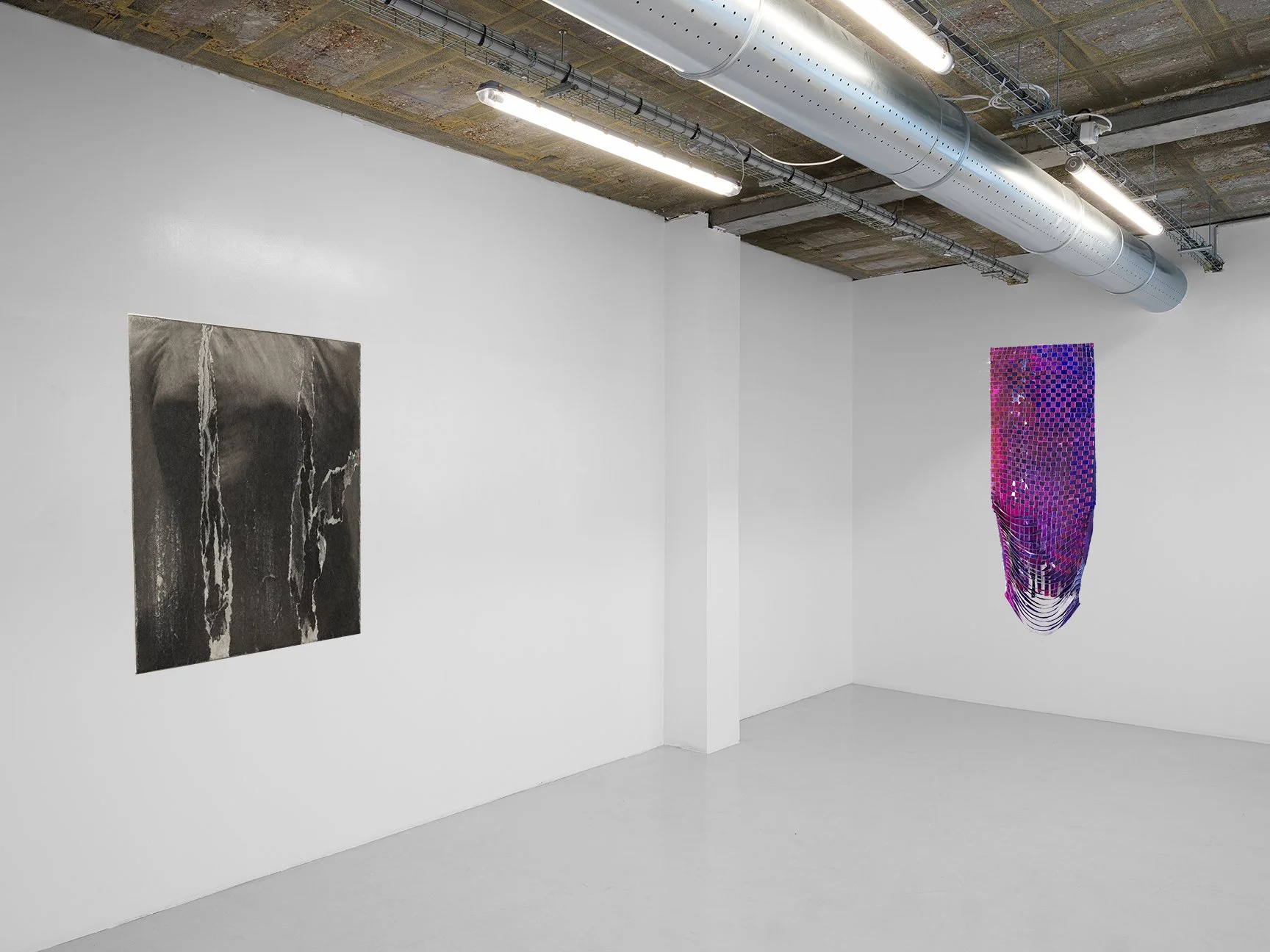
LEFT: Nick Lee RIGHT: Linda Colleta LEFT: Untitled (Hollowing) no. 1, 2025, inkjet print(s) on newsprint, wheatpaste, wood "LOOKING BACK IN FRONT OF ME" (500 words or less): I incorporate sculpture, materiality, and alternative processes with my photography, looking to expand the photograph outside of its traditional two-dimensional form. The materials I work with start raw and unscathed; they carry their own weight and meaning. Through additive processes, they begin to hold a trace. Through subtractive processes, I wash parts away, rip them apart, looking at what remains. The works become recordings, evidence of living, stained artifacts. I search for processes that echo themes of exposure and obscurity that are tethered within my photographs. Wheatpaste posters undergo a continuous cycle of application and removal. Reapplication hides what lives underneath, only to be torn down again, revealing what exists beneath the surface. My internal exploration becomes physical as I tear and reapply layers of my photographs, searching for what lies underneath. The image merges together, holding both the past and the present.
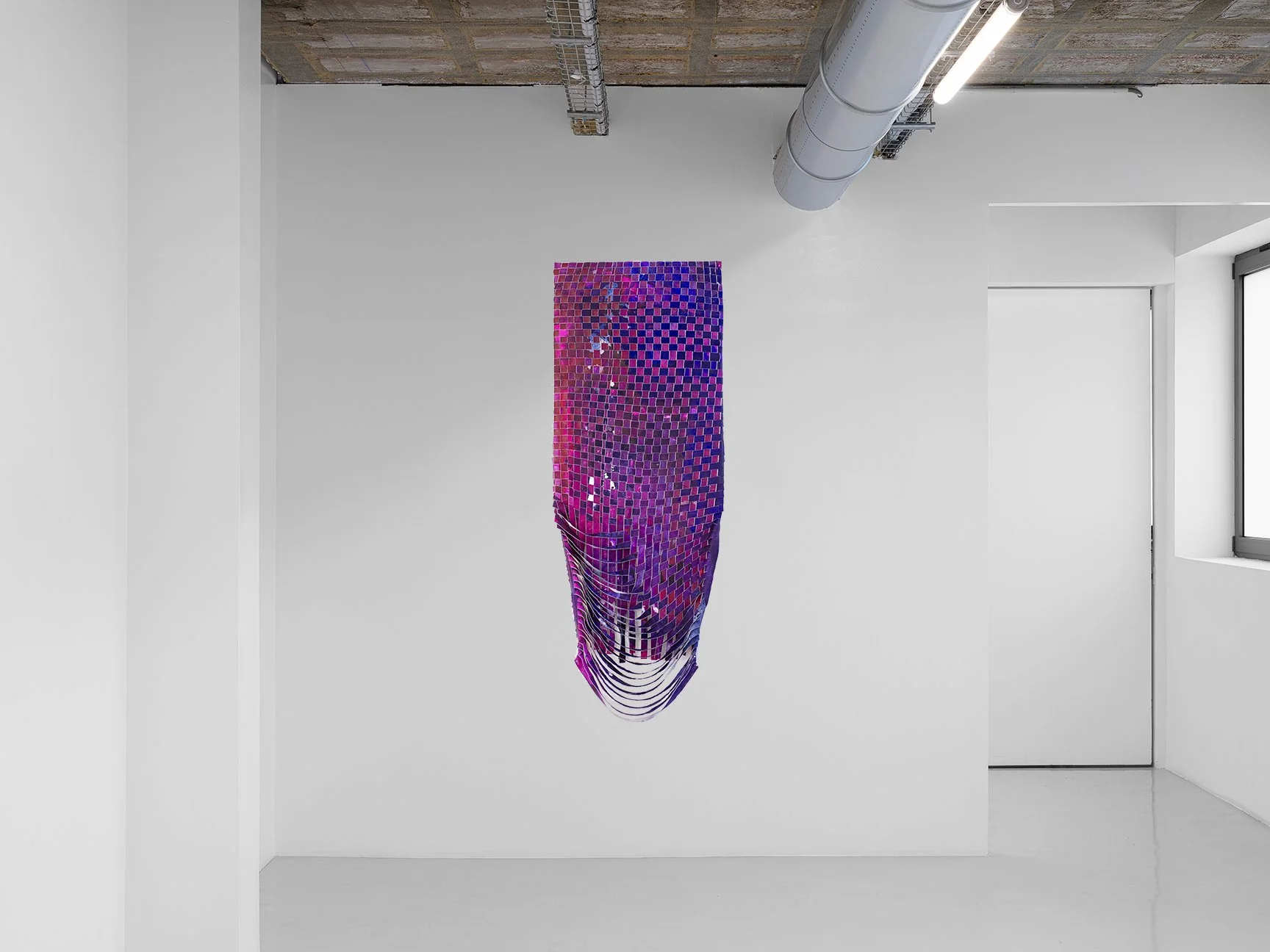
Linda Colletta Snake Eyes, 2024, Acrylic on canvas, LED light I approach weaving as a painter first. That distinction drives everything. I pool diluted acrylic paint onto raw canvas, building translucent, filmy layers over weeks, then tear the dried surface into narrow bands, fracturing the paint, fraying the edges, and weave them onto stretcher bars. The result is a painting that is also an object, structural and skin-like, that collapses the boundary between the picture plane and three-dimensional space. I came to weaving in 2020, this was a traumatic year for all of us, I felt helpless and needed a way to feel productive and healing. I needed to use my hands in a way that was slow, deliberate, and embodied. The repetitive, accumulative labor of weaving became its own argument. Weaving, embroidery, and quilting have been categorized as women's work: invisible, domestic, decorative. I am interested in claiming these traditions as painting, insisting that this way of making is as rigorous and charged as anything on a gallery wall. My primary influences are Sam Gilliam, who freed the canvas from the stretcher; Helen Frankenthaler, whose poured surfaces used color as environment; and Rauschenberg, who collapsed the boundary between painting and the ordinary world. My woven paintings extend all three: painting as object, color as time, material as message. The broader lineage I work within is the feminist reclamation of craft, in the tradition of Harmony Hammond's wrapped forms, Magdalena Abakanowicz's fiber environments, and Faith Ringgold's story quilts. I am interested in the imperfect. Every torn edge and irregular weave is a deliberate record of human making. The evidence of a body at work is not a flaw, it is a fingerprint. This work cannot be automated, templated, or replicated. That is not incidental to the work. It is the argument. The urgency of the handmade is, for me, both formal and political. David Batchelor's concept of chromophobia, the cultural impulse that codes whiteness as rational and orderly while marking color as vulgar, feminine, and excessive, is central to my thinking. I work with color as provocation, as something that has historically been denied and controlled, particularly in domestic and feminine contexts. Color, in my work, carries historical weight. It is a record of what has been suppressed. Each of my woven paintings is double-sided. The back is as important as the face. I am interested in what is hidden, what is contained, what is made to face the floor. My hand must remain visible throughout. The materiality of the work is the message. Recently, since I began weaving, my work has moved into deeply conceptual territory, addressing conformism, capitalism, colonialism, and the ongoing erosion of women's rights and basic freedoms. The ideas are outpacing what I can make. My research is focused on the history of weaving as women's work, on chromophobia and its uses as a tool of social control, on invisible labor, and on what it means to insist on the handmade in this particular moment.
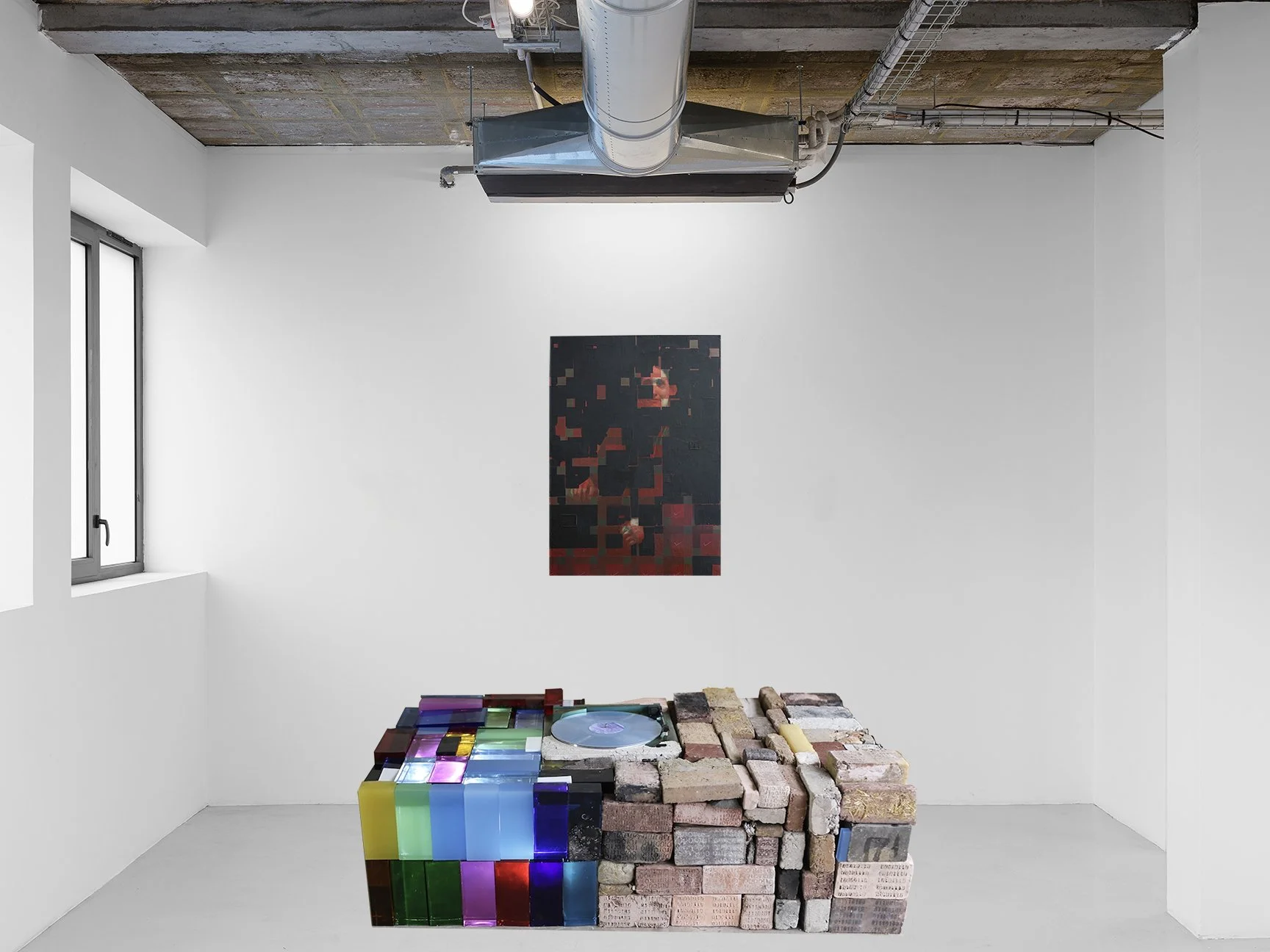
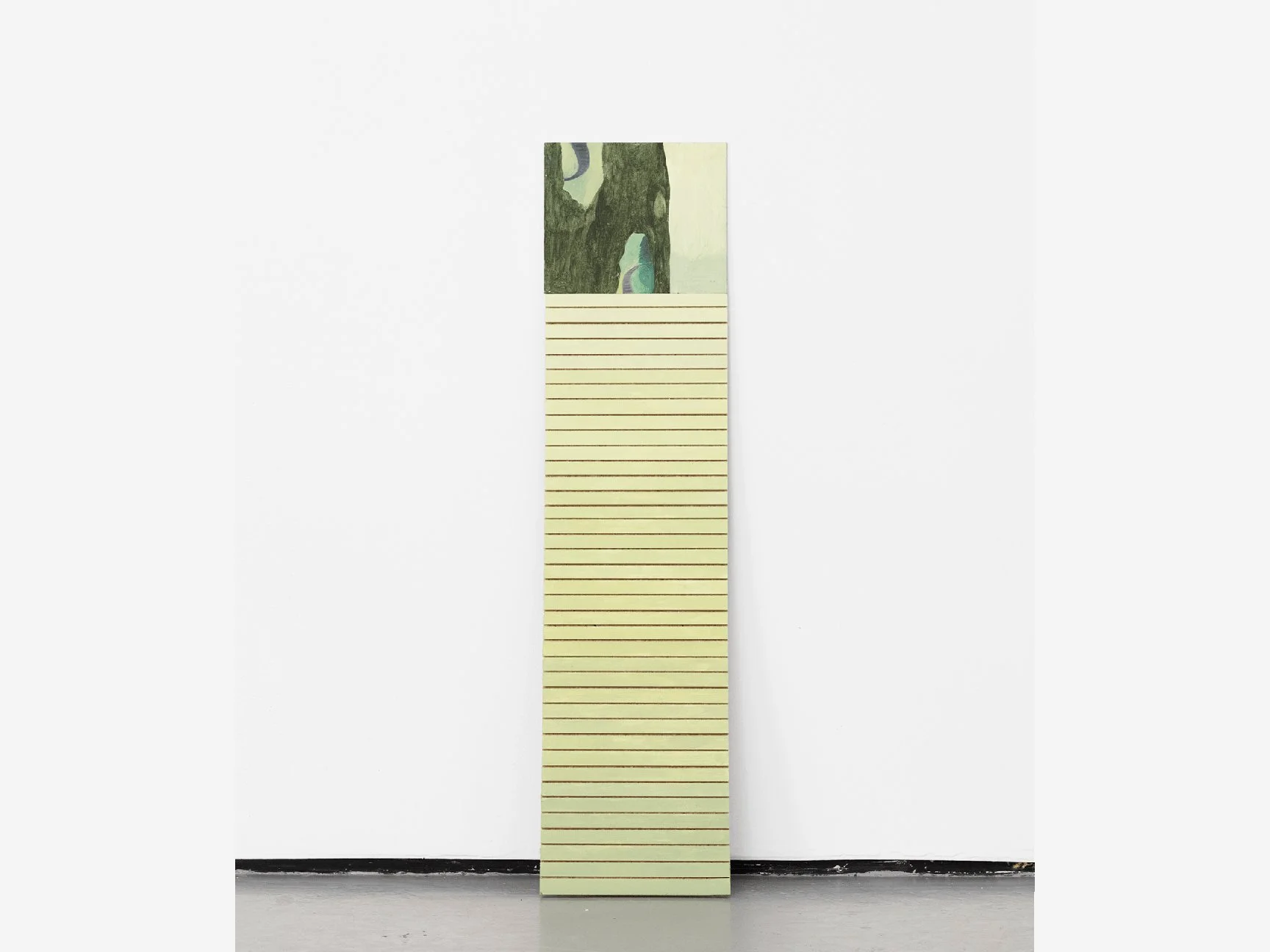
JS Horseman UPPER: צור (Tzur {Elke}, 2015/2025, oil on linen/panel LOWER: Churning Formantions; Breath Machine, 2020-2025, Clay, Concrete, Straw, Beeswax, Ash, Resin, Vinyl Record, Sound, Light JS-Horseman (ירמיהו) is a multidisciplinary artist who specializes in experimental music and audio(tape, modular synths, and field recordings)with visual arts like painting, installation, and sculpture. His work explores themes of human evolution, technology, and memory, often incorporating Jewish mystical elements."With a spectrum of visual and sonic languages, materials, and processes, I navigate a world of multidimensional storytelling, human evolution and world conflict amid our digital, A.I. era. With this, my work confronts concepts of creation and destruction, trauma and hope, preservation and renewal.
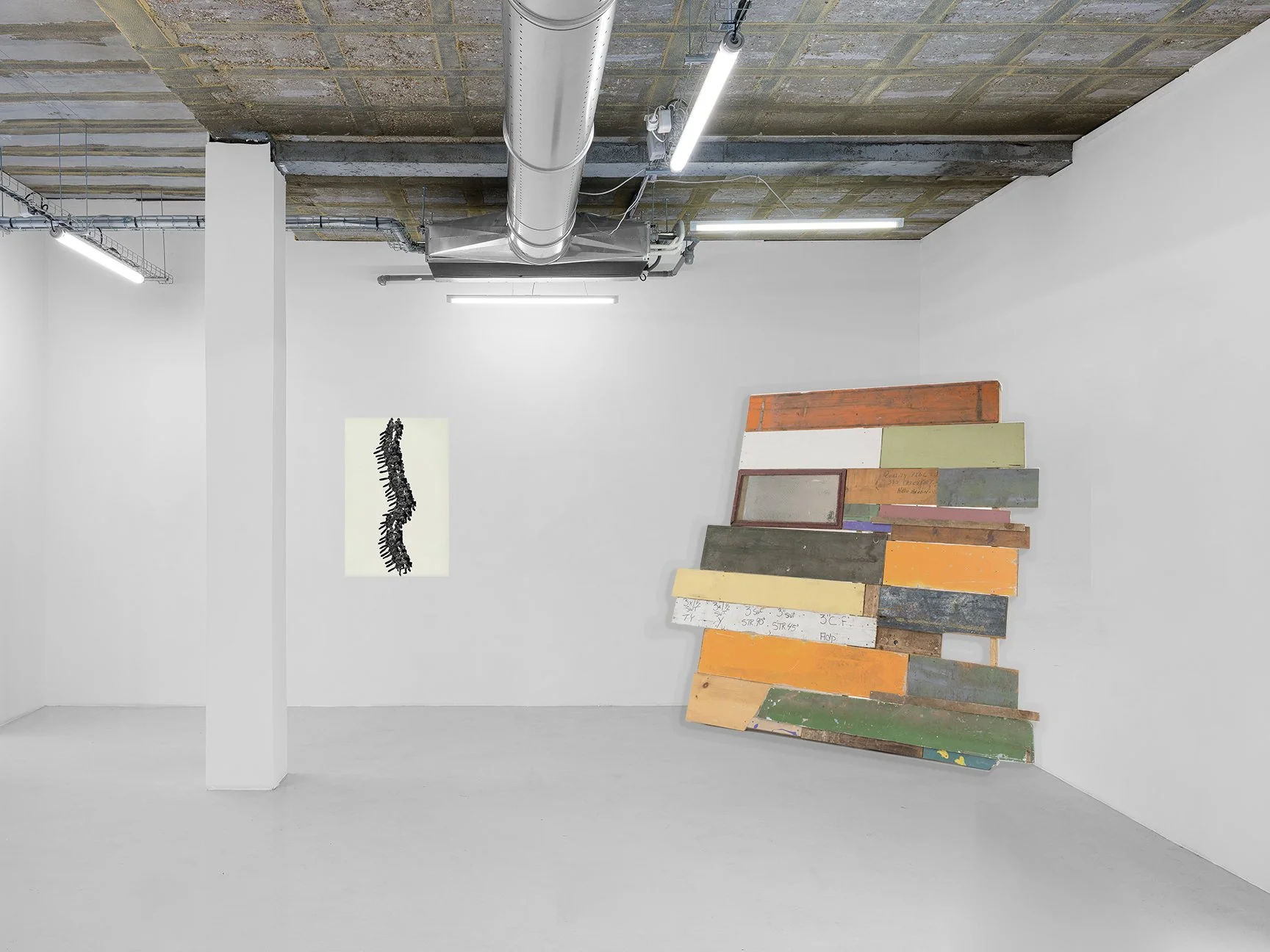
LEFT: Leah King RIGHT: Abenda Sohn Leah King This piece, SPINE (Uncle Dolly with the Washington Bears, 1943) is part of a series titled “If It Wasn’t For His Color, He’d Be a Sure Bet.” The works feature newspaper cutouts of my great uncle Dolly King and his teammates in the segregation-era National Basketball League. Abenda Sohn Untitled #1 Ventilation, 2026, Found Wood, mesh window screen My work explores migration, inheritance, and the emotional distance created through displacement. Drawing from my relationship with my father in Liberia, I use sculpture, video, installation, and found materials to examine how memory, labor, and care are transmitted across borders and generations. Everyday actions such as planting, building, waiting, or learning a mundane task become gestures that carry absence, longing, and attempts at connection. Materials such as corrugated steel, soil, wood, coffee, and domestic objects act as fragments of place and lived experience. I am interested in how these materials hold both physical and emotional histories, particularly in relation to temporary shelter, protection, migration, and reconstruction. Through repetition and reconstruction, the work reflects on what is preserved, lost, or transformed when one is separated from home, family, or cultural memory. For the show "LOOKING BACK IN FRONT OF ME," the artwork explores how the past continues to influence the present. It addresses the challenge of rebuilding in a new place and contemplates which fragments of home can be reimagined to evoke a constantly changing environment. This process involves reconciling with memories and small remnants of the past. "Looking back at me" represents a form of self-reflection as well as a reexamination of one's identity in relation to memory and place.
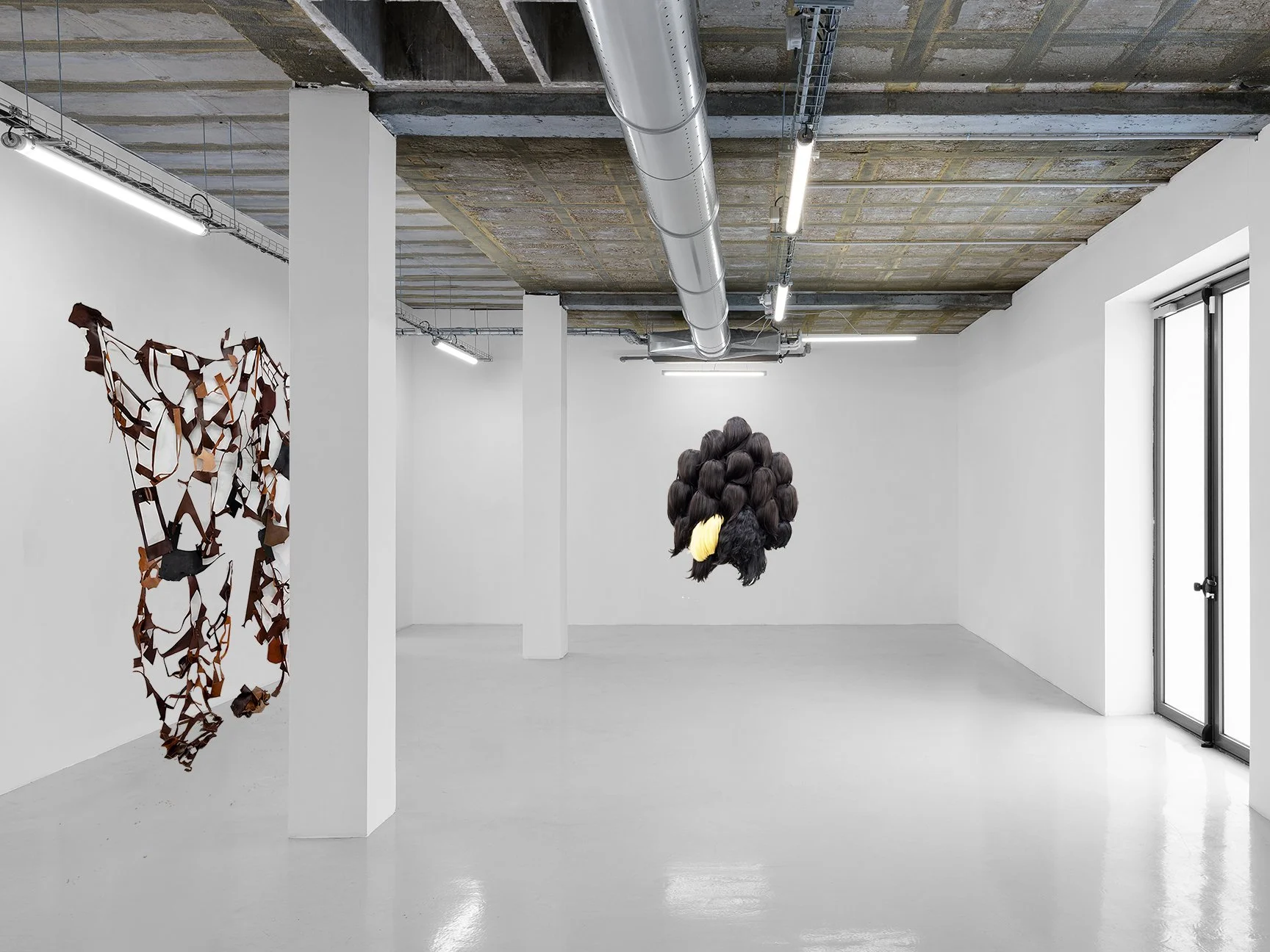
Cameron Patricia Downey
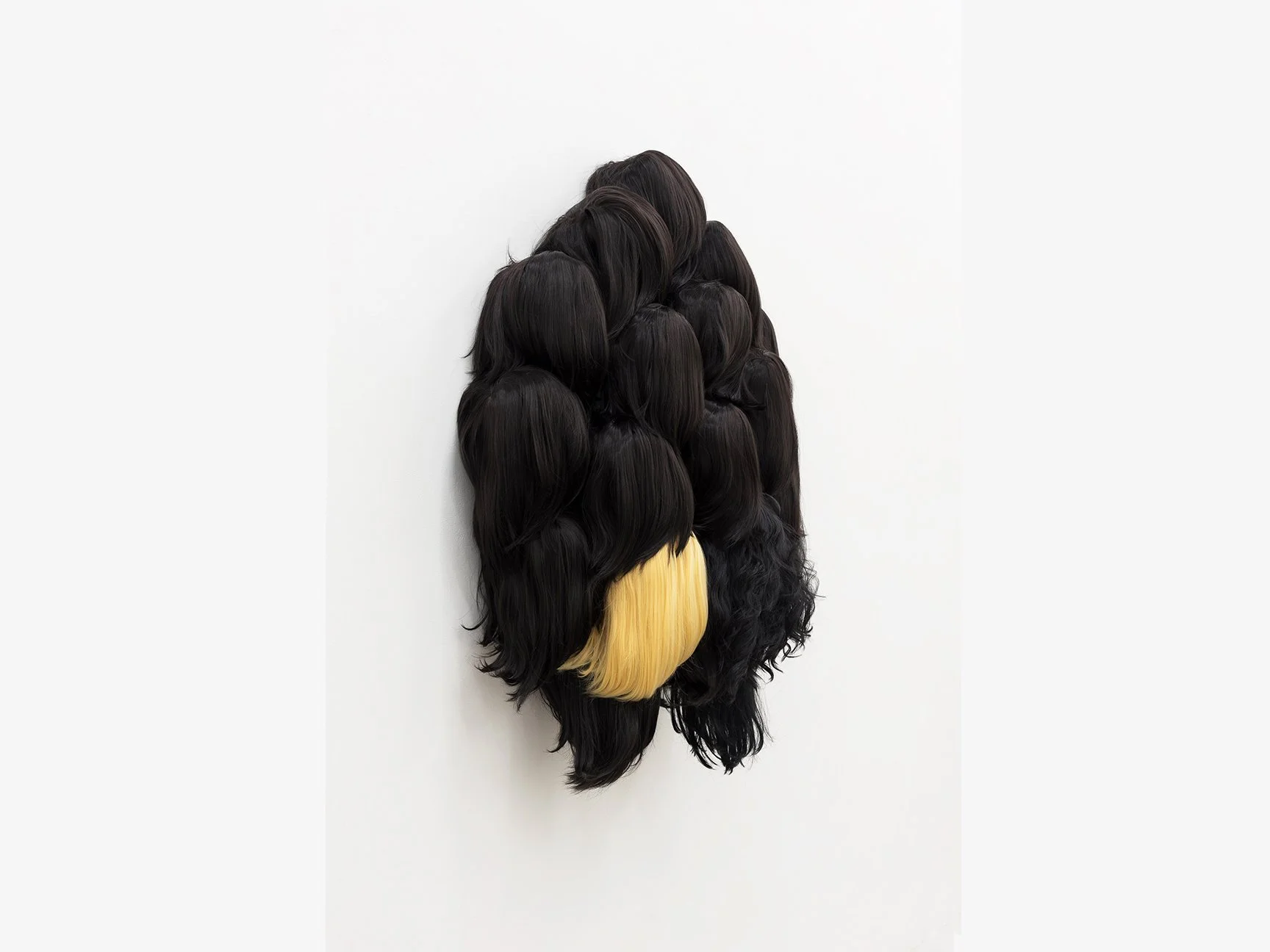
Cameron Patricia Downey Company, 2025, hair, metal, acrylic Cameron Patricia Downey (b. Minneapolis, MniSóta Makoce) is an antidisciplinary artist whose work oscillates between sculpture, print, film, body and otherwise. Peering into the private lives of objects, seeing instruction in the incidental and the misremembered, Downey’s work strives to unfurl, make-altar-of and lend fantasy to the Blues of Black life and relation. Adornments gather in glamorous community, crowding around their spectres; communion sought with objects themselves. Central for Downey is a belief that form is not just a record keeper, but a philosophy of feeling. The thing is the way.
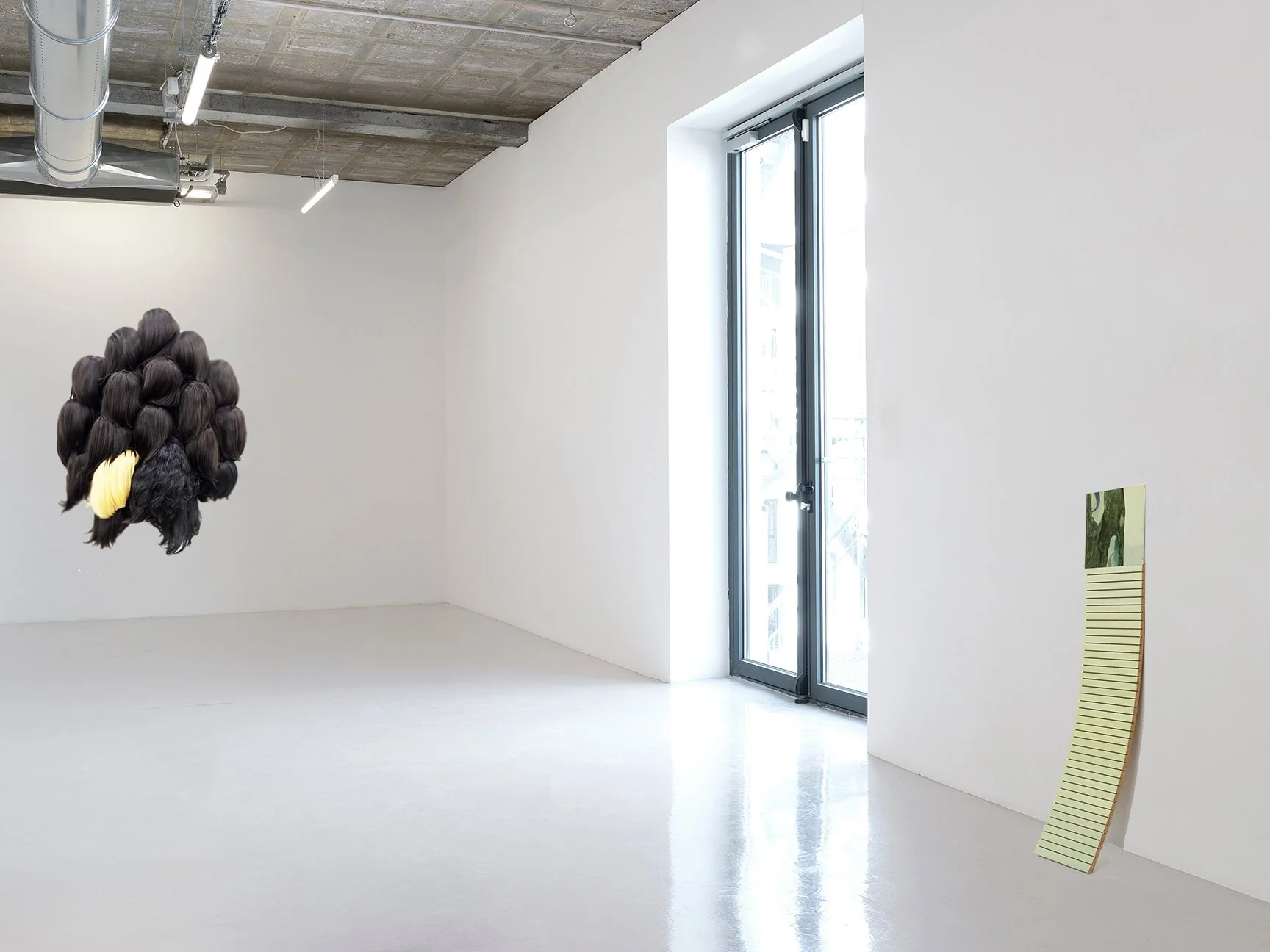
Cameron Patricia Downey
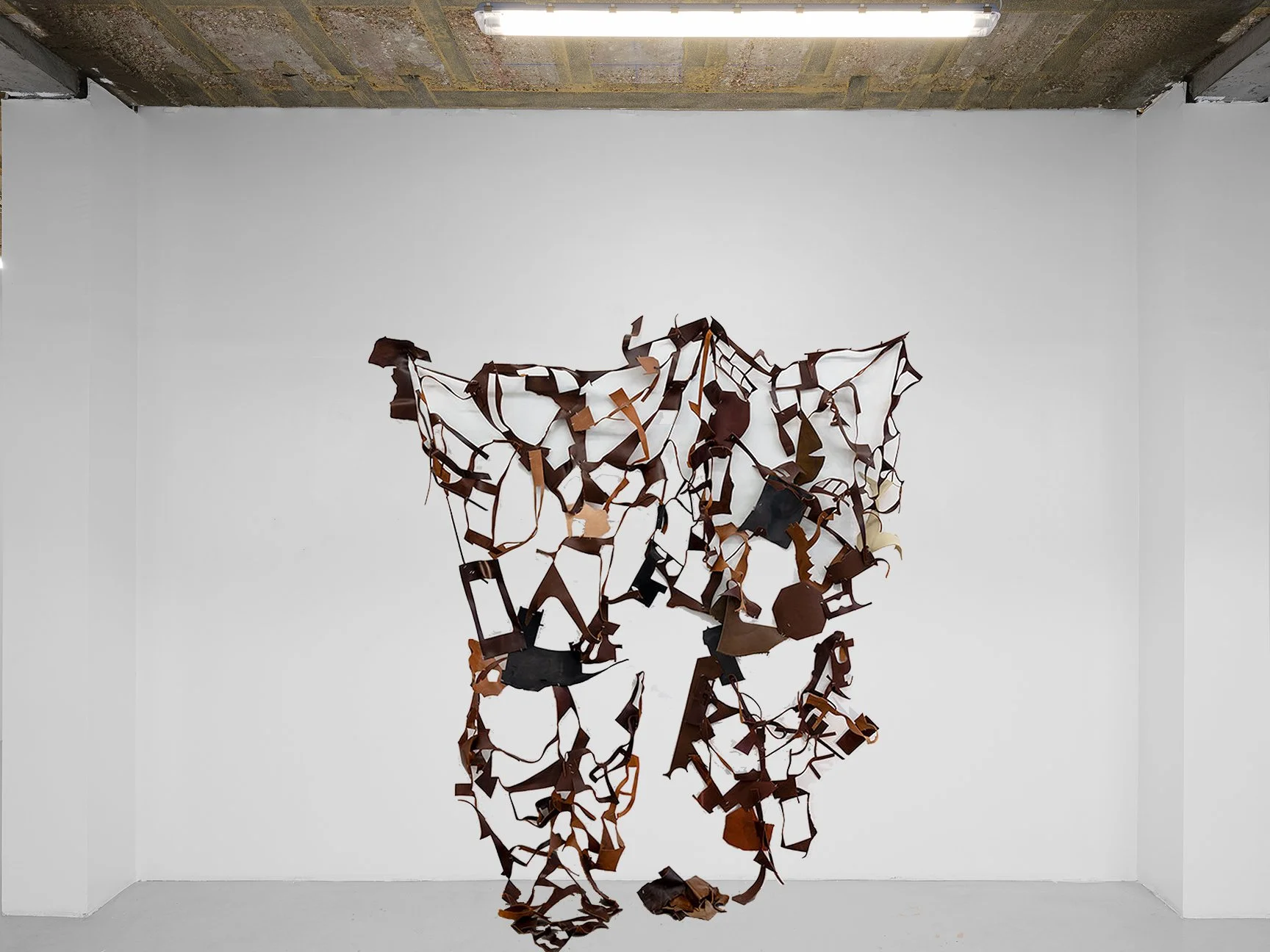
Cameron Patricia Downey Otherwise Than, leather Cameron Patricia Downey (b. Minneapolis, MniSóta Makoce) is an antidisciplinary artist whose work oscillates between sculpture, print, film, body and otherwise. Peering into the private lives of objects, seeing instruction in the incidental and the misremembered, Downey’s work strives to unfurl, make-altar-of and lend fantasy to the Blues of Black life and relation. Adornments gather in glamorous community, crowding around their spectres; communion sought with objects themselves. Central for Downey is a belief that form is not just a record keeper, but a philosophy of feeling. The thing is the way.
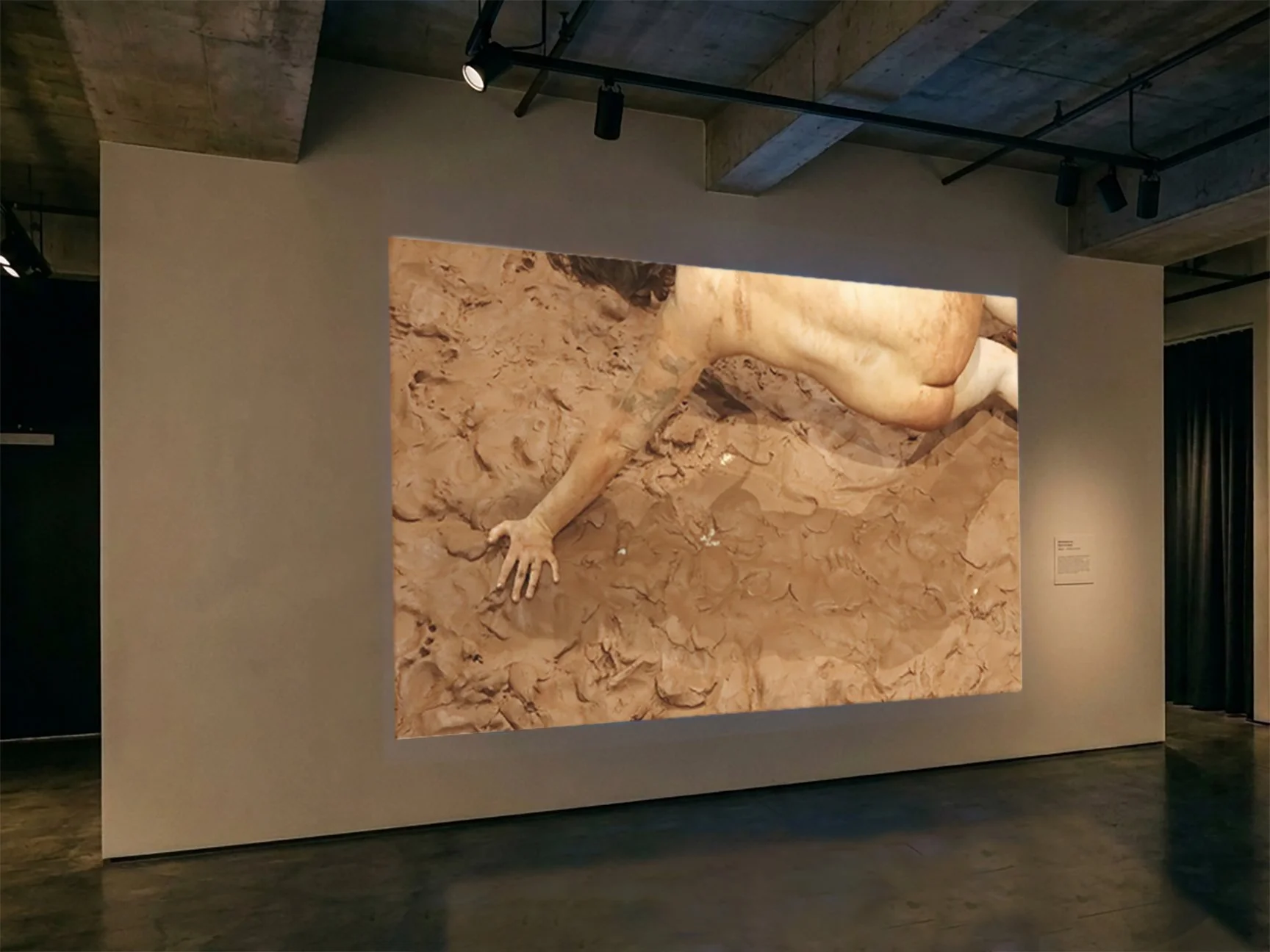
Annaliese Cole-Weiss Fall Catalog, 2025, video My work spans the use of clay, video, installation, and movement-based practices to explore gender, performance, the function of the archive, and our systems capacity for uncertainty and change. My practice explores the connective tissue between sculpture and movement as a pathway toward radical queer embodiment. This inquiry is in response to observing increasing apathy and disconnection within an over-digitalized world, and to a curiosity about in what ways we can pressurize systems already at play in order to reveal their malleability, and expose our agency. I am drawn to in-between spaces — sites that resist either/or binaries and instead hold multiple truths, engage slippage, and prioritize ambivalence. Working within these middle grounds shows how capacious they can be. My practice interrogates the physical, epistemological, and social structures that dictate how bodies are permitted to move through the world. My queer identity functions as an intrinsic lens through which I approach material and form, attuning me to coded systems, fluidity, and the power of recontextualization. Materially, I juxtapose hard logics of the grid, fired ceramic, and legibility with the mutable qualities of raw clay, projection, performance and illegibility. Through these combinations, I create works that function as pathways toward embodiment — structures that imply, invite, and record movement while proposing alternative forms of documentation and non-linear experiences of time. Using strategies of camouflage and opacity, conventions of material, scale, and temporality compress and dissolve while a queer archive emerges, in particular one which deprioritizes transparency and longevity, and instead prioritizes ephemerality and illegibility. At its core, my practice asks what structures are already operating within material space and time, and how bringing them into being through sculpture, performance, and the body as material might reveal their capacity for adaptability, and truth-telling. fall catalog is a work which explores a movement score of ‘falling and performing falling.’ The score is operating as a binary norm that will have to be negotiated in the making of the work, leading to inevitable failure. The dichotomous score of ‘falling and performing falling’ is set up so that the movement lands somewhere in-between. In this video there are clips of me falling as a result of a genuine interaction between the weight of my body, gravity, and my inability to remain upright, and falling as a result of me performing what I believe it might look like to fall, evoking the idea of performance as camouflage and self defense for people holding queer identities. There are also moments in between where the movement started as one response to the score and ended up as another, either due to the other changing conditions of the physical environment or due to the manipulation that happened in the editing process. Inside imposing a score that proposes a binary, the most prevalent, frequent, and authentic movements that emerge are ones in-between. This work invites a cyclical interpretation of the relationship between different modes of performance, where multiple modes start to influence each other, further complicate the middle, and capture the nuance of what it looks like to adapt to changing conditions.
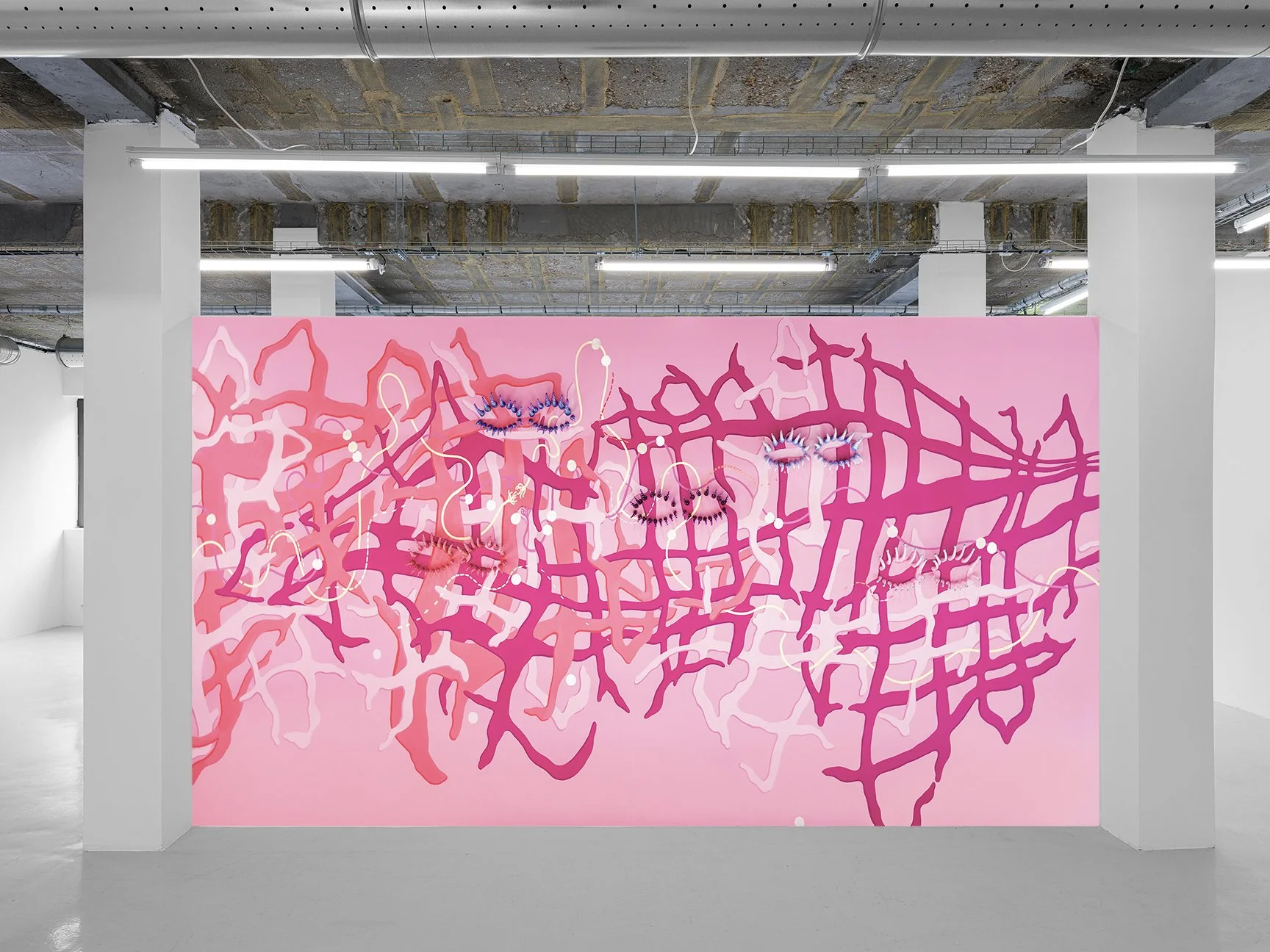
Ali Hval Eye Spies (Installation View), 2026, ceramic, acrylic, rhinestones, holographic vinyl, beads, mural Growing up in the southern US, being surrounded by rigid expectations of what it meant to be a “proper” woman was the norm. My work challenges such ideals, using femininity to reveal the politicization of the female body, and considering how politics causes women to navigate private and public spaces. Using clay, I create sculptures that echo oversized pieces of jewelry, shoes, and domestic objects. Built from high-fired stoneware and embellished with materials like rhinestones and nail polish, these pieces playfully seek attention. Each piece speaks in its own voice--excessive, unabashedly hyper-feminine, and most importantly, pink--with an exaggerated scale that invites viewers to imagine wearing or interacting with them. The weight of these objects, combined with the fragility of ceramics, reveals how decisions regarding bodily autonomy places heavy burdens on the wearer. They twist the way we see: at first, sparkling and whimsical, but upon closer inspection, more sinister.
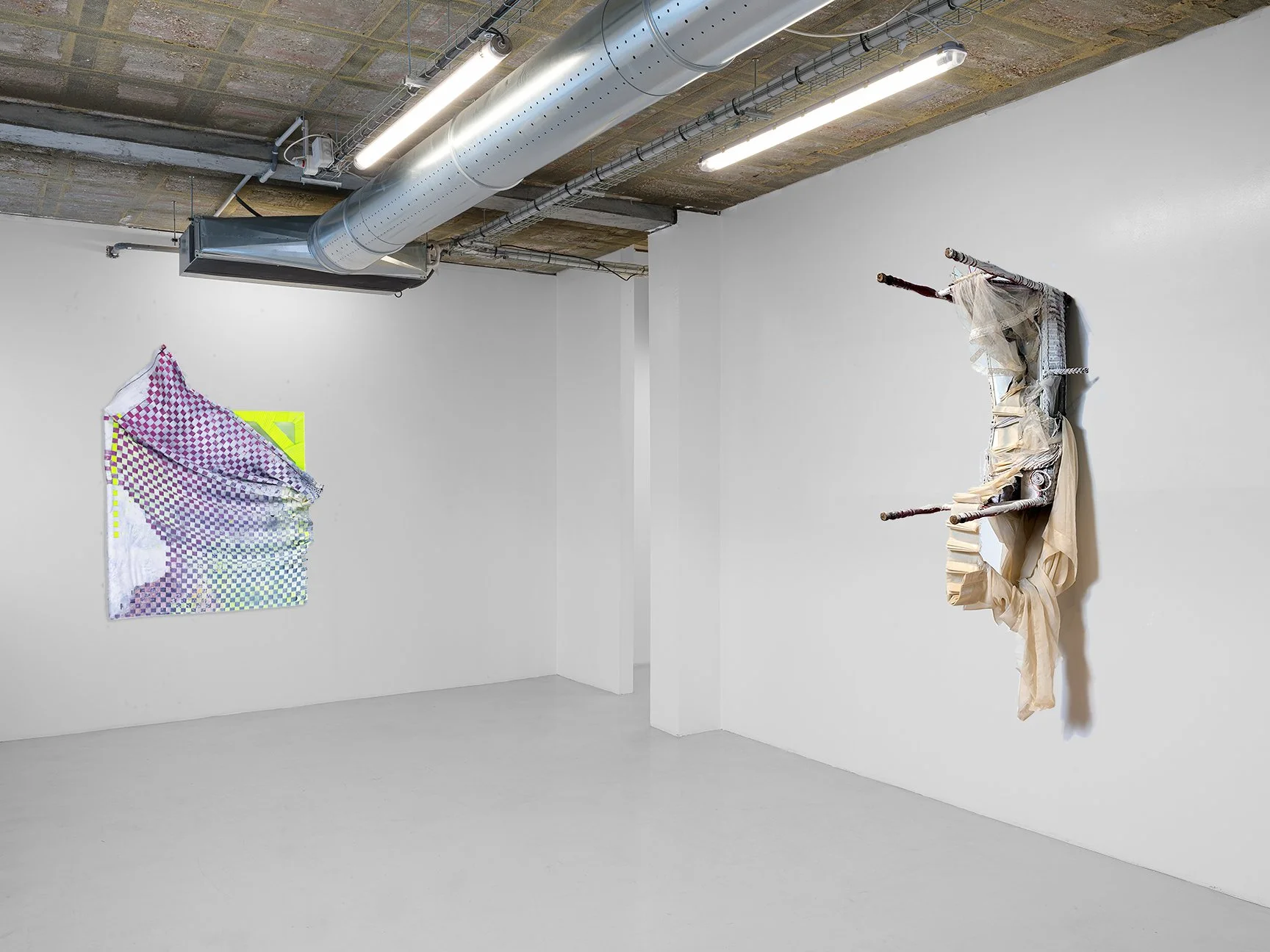
LEFT: Linda Colletta RIGHT: Alicia Renadette LEFT: scratch and sniff I RIGHT: Imprint
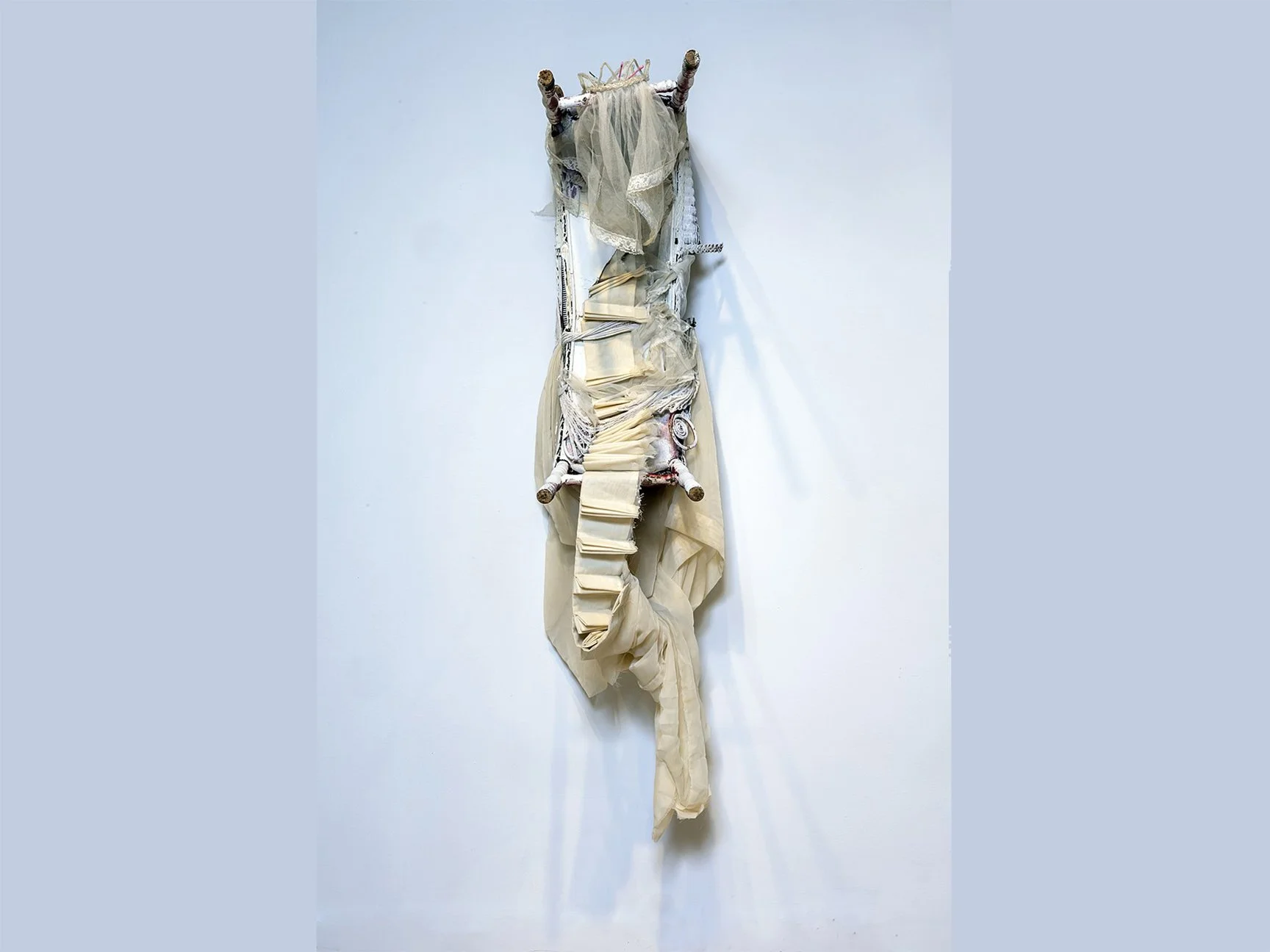
Alicia Renadette Imprint, 2025, Modified wicker plant stand, sheer cream curtain, communion veil, leftover white ceiling paint I gather found and foisted objects connected to childhood, comfort, and celebration from neighborhood curbside piles and friends. I transform them, along with banal and functional domestic objects, into otherworldly sculptures that embody themes of struggle and determination, materialism and connection, and layers and accumulation. My sculptures often combine ornate, commemorative and monumental forms of temples, altars, tiered cakes, ice cream sundaes, with images of microorganisms, microhabitats like webs and nests, biological and botanical systems, particulates, and speculative biomorphic or supernatural entities. These complex and layered forms imagine and reveal the unseen peripheral, subliminal, and energetic presences covertly harbored in our materially cluttered, or carefully curated, homes, bodies, minds and culture. Built around a scaffolding made from dismantled furniture, bases and stands, these objects that were meant to provide structure and stability now serve as off-kilter armatures and porous cages.